Nephrological diseases often present with little specificity and/or overlapping symptoms, which makes a precise clinical diagnosis difficult. Variants that can cause kidney disease are known in over 700 genes. With modern NGS-based sequencing methods (NGS: Next Generation Sequencing), all genes relevant to differential diagnosis can be examined in a single approach.
For an even broader approach, we can extend the analysis of the data to Whole Exome Sequencing plus(WESplus), genome sequencing (WGS) and RNA sequencing (RNA-Seq). We always reflect the current state of knowledge and consider all clinically relevant regions, regardless of their localization in the genome, with a high level of qualitative expertise - both in the laboratory and in interpretation.
High relevance for kidney diseases
A significant proportion of chronic kidney disease (CKD) is due to monogenetic causes, 30 - 50 % in children and young adults and 20 - 40 % in adults(1). It is therefore a logical and proven cost-effective step to include genetic diagnostics in routine nephrology procedures. Its clinical and increasingly also therapeutic relevance is enormous: In a study published in 2023 with over 1,500 adult CKD patients who were examined for causative genetic changes, 20.8% had a genetic cause(2). In these 338 patients, the results of the genetic testing led to
- led to a corrected new diagnosis in about half of the patients
- an adjustment of clinical management in over 90%
- a change in therapy in about one third
In addition to its relevance for diagnosis and choice of therapy, the identification of genetic causes creates clinical added value in other aspects (see figure) and is of great importance not only for those affected, but also for their families.
Clinical added value
The infographic above shows the clinical added value for patients and their families of a precise genetically-defined diagnosis for the various aspects of care and treatment for genetic kidney diseases.
High level of expertise in nephrogenetics
In addition to the use of state-of-the-art technologies, our laboratory is also characterized by a high level of expertise in nephrogenetics, so that we can guarantee the highest quality in the selection of genes and regions to be considered, the analysis and the interpretation of results.
Various genes and regions that play an important role in nephrological diseases are genetically highly complex. For example, they have a high GC content, which leads to DNA compaction and makes sequencing more difficult. Other regions are highly repetitive, which requires targeted analysis and is bioinformatically challenging. Through specific enrichment and customized approaches, we are able to cover even complex regions with high sequencing depth and ensure high sensitivity and specificity.
We offer special diagnostics for pathogenic variants of the MUC1 gene- the most common cause of autosomal dominant tubulointerstitial kidney disease (ADTKD). The genetic alteration is located in a highly repetitive region with a high GC content and cannot be reliably detected using conventional sequencing.
The nephrogenetic analysis is complemented by consideration of the mitochondrial genome. Pathogenic mitochondrial changes are characterized by an extremely colorful and heterogeneous clinical picture and can also present as isolated renal symptoms.
We have compiled an overview of our diagnostic services in the field of nephrology - from A for Alport syndrome to Z for cystic kidney disease.
From a single source
High level of expertise
Research participation
Sources
(1) Köttgen et al. Kidney Int 101 (6), 1126-1141 (2022), Schott et al. Clin J Am Soc Nephrol 20, 101-115 (2025)
(2) Dahl et al. J Am Soc Nephrol 34, 2039-2050 (2023)
We are here for you if you have any questions!
Prof. Dr. med. Carsten Bergmann
Leitung Humangenetik in der Limbach GruppeResources for further information:

LaborAktuell Genetic diagnosis of atypical hemolytic uremic syndrome (aHUS)

LaboratoryNews Glomerular diseases with the main symptoms proteinuria and hematuria

LaborAktuell Cystic kidneys
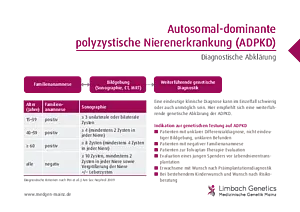
PocketCard Autosomal-dominant polycystic kidney disease (ADPKD)